How to Create Commercial Videos That Align With Brand Goals
June 30, 2026
By Durga Thakkar
5 MIN
Table of Contents
Commercial videos have evolved from being simple promotional tools into strategic brand assets that drive awareness, engagement, lead generation, and revenue. In today's digital-first landscape, businesses invest heavily in video because it consistently delivers measurable results.
However, not every commercial video contributes to business growth. Many campaigns attract views but fail to support broader marketing objectives because they focus on creativity without aligning with brand goals. Successful brands approach video production strategically, ensuring every concept, visual, and message contributes to specific outcomes.
This is where professional Production & Content Services play a crucial role. By combining strategic planning, audience insights, creative storytelling, and performance measurement, brands can create commercial videos that not only capture attention but also drive meaningful business results.
Define Clear Business and Marketing Objectives Before Production
Every effective commercial video begins with a clear understanding of what the business wants to achieve. Without defined goals, even the most visually appealing video can struggle to deliver value. Before production starts, brands should establish measurable objectives that guide the creative process and influence every production decision.
A goal-first approach ensures that creative execution remains aligned with business outcomes and audience expectations. Setting measurable objectives is essential because marketing teams are under increasing pressure to demonstrate ROI. According to HubSpot's 2025 State of Marketing Report, proving marketing effectiveness remains one of the top priorities for marketers worldwide. Commercial videos tied to specific KPIs are significantly easier to evaluate and optimise over time.
Identify the primary objective: Clearly define what success looks like before production begins. Whether the goal is brand awareness, lead generation, website traffic, customer retention, or sales, a specific objective helps guide every creative and strategic decision.
Establish measurable KPIs: Determine how performance will be evaluated by selecting metrics such as impressions, engagement rates, watch time, click-through rates, conversions, or revenue. Clear KPIs make it easier to assess campaign effectiveness and justify investment.
Align video goals with business strategy: Ensure the commercial video supports broader organisational priorities and marketing initiatives. When video objectives connect directly to business goals, campaigns are more likely to contribute meaningful and measurable results.
Create audience-specific goals: Different audience segments often respond to different messages and calls to action. Establishing goals for each target group helps create more relevant content and improves the likelihood of achieving desired outcomes.
Define the customer journey stage: Tailor the video's messaging and storytelling to where viewers are in the buying process. Awareness, consideration, and decision-stage audiences each require different content approaches and engagement strategies.
Set realistic performance benchmarks: Use historical campaign data, competitor insights, and industry standards to establish achievable expectations. Realistic benchmarks provide context for evaluating results and identifying opportunities for future improvement.
Collaborate with expert Production & Content Services teams: Experienced production partners can translate business objectives into compelling creative concepts. Their strategic expertise helps ensure that every element of the video supports measurable marketing goals.
When objectives are clearly defined from the beginning, every creative decision becomes more purposeful, increasing the likelihood of campaign success.
Build Commercial Video Concepts Around Audience Insights
Understanding the audience is one of the most important factors in creating effective commercial videos. Modern consumers are exposed to thousands of marketing messages daily, making relevance a key driver of engagement. Brands that deeply understand their audience can create content that resonates emotionally and motivates action.
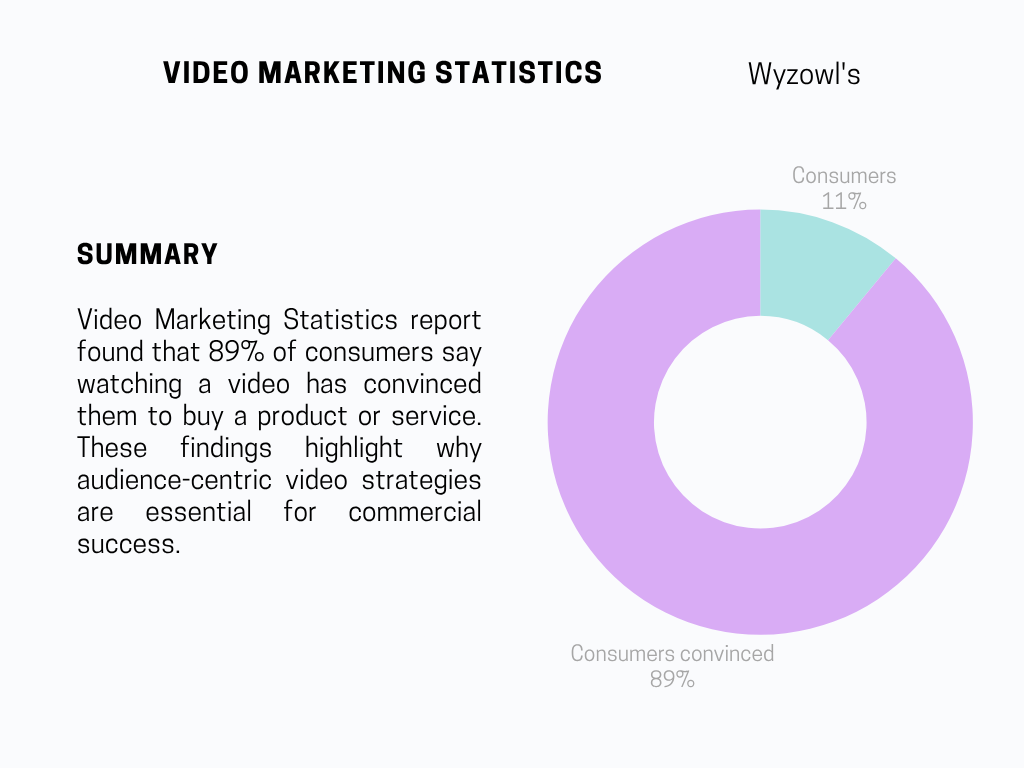
Research-driven video strategies help brands connect with viewers on a more meaningful level while improving campaign performance. Audience research has become increasingly important as video consumption continues to grow. According to HubSpot's 2026 State of Marketing Report, short-form video delivers the highest ROI among content formats, with marketers consistently ranking video as one of the most effective channels for engagement and lead generation. Similarly, Wyzowl's 2026 Video Marketing Statistics report found that 89% of consumers say watching a video has convinced them to buy a product or service. (Hubspot) (Wyzowl)
Develop detailed audience personas: Create comprehensive profiles that include demographics, interests, challenges, purchasing behaviours, and content preferences. These insights help shape messaging, visuals, and storytelling that resonate with the intended audience.
Analyse customer pain points: Identify the specific problems, frustrations, or needs your audience experiences. Addressing these challenges through authentic storytelling demonstrates value and positions your brand as a relevant solution provider.
Study platform behaviour: Audience expectations vary significantly across digital channels. Understanding how users consume content on platforms such as YouTube, Instagram, LinkedIn, and TikTok helps optimise format, tone, and delivery.
Use social listening data: Monitor online conversations, reviews, comments, and feedback to uncover audience interests and emerging trends. These insights can inspire more relevant content and strengthen audience engagement.
Focus on emotional triggers: Purchasing decisions are often influenced by emotions before logic. Incorporating relatable experiences, aspirations, or challenges into commercial videos can create stronger connections and encourage action.
Personalise messaging where possible: Tailored communication helps audiences feel understood and valued. Personalisation can improve engagement rates, strengthen brand affinity, and increase the effectiveness of commercial video campaigns.
Leverage insights gathered through Production & Content Services research processes: Professional research and audience analysis provide valuable guidance for script development, creative direction, and campaign planning, resulting in more impactful video content.
Ready to create commercial videos that drive measurable results? Invest in professional Production & Content Services to align every campaign with your brand goals.
Ensure Brand Consistency Throughout the Creative Process
A commercial video should immediately feel like an extension of the brand. Consistency across messaging, visual identity, tone, and storytelling helps strengthen recognition and build trust with audiences. When viewers can instantly associate a video with a brand, the campaign becomes more memorable and effective.
Brand consistency also supports long-term marketing efforts by creating a cohesive experience across multiple touchpoints. Consistent branding directly impacts business performance. Research from Lucidpress (Marq) continues to show that consistent brand presentation across channels can increase revenue by up to 33%. In an environment where consumers interact with brands across multiple digital touchpoints, maintaining visual and messaging consistency in commercial videos is critical for recognition and trust.
Establish clear brand guidelines: Document standards for colours, typography, logo placement, imagery, and creative direction. Clear guidelines help maintain consistency across campaigns and ensure every commercial reflects the brand accurately.
Maintain a consistent brand voice: Every commercial should reflect the brand's established personality and communication style. Consistent tone and messaging strengthen recognition, build trust, and create a more cohesive audience experience.
Incorporate core brand values: Commercial videos should communicate what the company stands for in addition to promoting products or services. Highlighting values helps build credibility and foster deeper emotional connections with audiences.
Create recognisable visual elements: Consistent use of imagery, graphics, colours, and design cues improves brand recall. Familiar visual elements make it easier for audiences to identify and remember your brand.
Ensure messaging alignment: Every statement, narrative element, and call-to-action should reinforce the brand's positioning and value proposition. Consistent messaging helps eliminate confusion and strengthens overall campaign effectiveness.
Adapt creatively without losing identity: Content should be tailored to different platforms and audiences while preserving the brand's core personality. Flexibility and consistency can coexist when guided by clear creative principles.
Utilise experienced Production & Content Services professionals: Skilled production teams understand how to balance creativity with brand requirements. Their expertise helps ensure consistency throughout planning, filming, editing, and final delivery.
Measure Performance and Continuously Optimise Video Content
Creating a commercial video is only the beginning. The most successful brands treat video production as an ongoing optimisation process rather than a one-time campaign. Performance data provides valuable insights into audience behaviour, helping marketers refine future content and maximise return on investment.
Data-driven optimisation is becoming a standard practice among high-performing marketers. HubSpot's 2025 marketing research indicates that marketers increasingly prioritise conversion metrics, engagement rates, and customer acquisition costs when evaluating video success. Businesses that regularly test and optimise creative assets typically achieve stronger campaign performance than those relying on one-time production efforts.
Track engagement metrics: Analyse views, watch time, audience retention, shares, comments, and other interactions to understand how viewers engage with content and identify opportunities to improve future performance.
Analyse conversion performance: Measure how effectively video content contributes to lead generation, purchases, sign-ups, inquiries, or other business objectives. Conversion data helps connect creative efforts to tangible business outcomes.
Conduct A/B testing: Test different hooks, thumbnails, calls-to-action, video lengths, and messaging approaches. Comparing variations helps identify which creative elements generate stronger engagement and conversion results.
Review audience retention data: Examine where viewers stop watching or lose interest during the video. Retention insights can reveal weaknesses in pacing, storytelling, or structure that require optimisation.
Evaluate platform-specific performance: Compare results across channels to understand how audiences respond in different environments. Platform-specific analysis helps refine content strategies and improve distribution effectiveness.
Use AI-powered analytics tools: Advanced analytics platforms can uncover behavioural patterns, audience preferences, and performance trends. These insights support smarter decision-making and more effective content optimisation efforts.
Partner with Production & Content Services providers focused on performance marketing: Data-driven production teams continuously analyse results and refine creative strategies. Their expertise helps improve campaign effectiveness and maximise long-term return on investment.
Create commercial videos that capture attention and deliver results with end-to-end Production & Content Services built for modern brands.
Conclusion
Creating commercial videos that align with brand goals requires much more than strong visuals and creative storytelling. It involves defining clear objectives, understanding audience behaviour, maintaining brand consistency, and continuously measuring performance. Each stage of the production process should support a specific business outcome while delivering value to the target audience.
As video continues to dominate digital marketing strategies, brands that take a strategic approach will be better positioned to stand out in competitive markets. Research consistently shows that video remains one of the most effective content formats for driving engagement, building trust, and generating ROI. Businesses that invest in professional Production & Content Services gain access to the expertise needed to transform creative ideas into measurable business results.
By aligning creativity with strategy, brands can produce commercial videos that not only capture attention but also strengthen brand equity, support marketing objectives, and drive sustainable growth.
From concept to execution, Scratchpad helps brands create commercial videos that deliver real business impact.
FAQs
1. What is a commercial video? A commercial video is a promotional video created to market a brand, product, service, or campaign and encourage a specific audience action.
2. What are the 12 types of commercials? Common types include TV commercials, online video ads, product demos, brand videos, testimonial videos, explainer videos, social media ads, animated commercials, influencer ads, retargeting ads, event commercials, and corporate commercials.
3. How to start a commercial video? Start with a strong hook that grabs attention, highlights a problem, or introduces a key benefit within the first few seconds.
4. How much to charge for a commercial video? Charges depend on factors such as video length, production complexity, crew size, equipment, editing, and distribution requirements.
5. What are the charges for commercial video? Commercial video production can range from ₹20,000 to several lakhs in India, depending on the project's scope, quality, and production nee
RECENT BLOGS
How Motion Graphics Make Brand Messaging More Effective
Why Packaging Design Plays a Critical Role in Buying Decisions
Why Mobile App Development Matters for Growing Businesses


.png)