Many businesses initially view SEO as a supporting marketing tactic rather than a primary growth driver. In the early stages, brands often rely heavily on paid advertising to generate immediate traffic, leads, and sales. While paid campaigns can deliver quick results, they require continuous spending to maintain visibility. SEO, on the other hand, compounds over time and can become one of the most sustainable growth channels a business invests in.
As search engines continue to prioritise high-quality content, user experience, and authority signals, businesses that invest strategically in SEO can build a steady stream of organic traffic that grows month after month. Unlike short-term campaigns, SEO creates lasting digital assets that continue delivering value long after publication.
Many organisations that invest in Performance Marketing Services eventually discover that combining paid acquisition with a strong SEO strategy creates a balanced marketing ecosystem. While paid campaigns generate immediate results, SEO establishes long-term visibility, lowers customer acquisition costs, and strengthens brand authority.
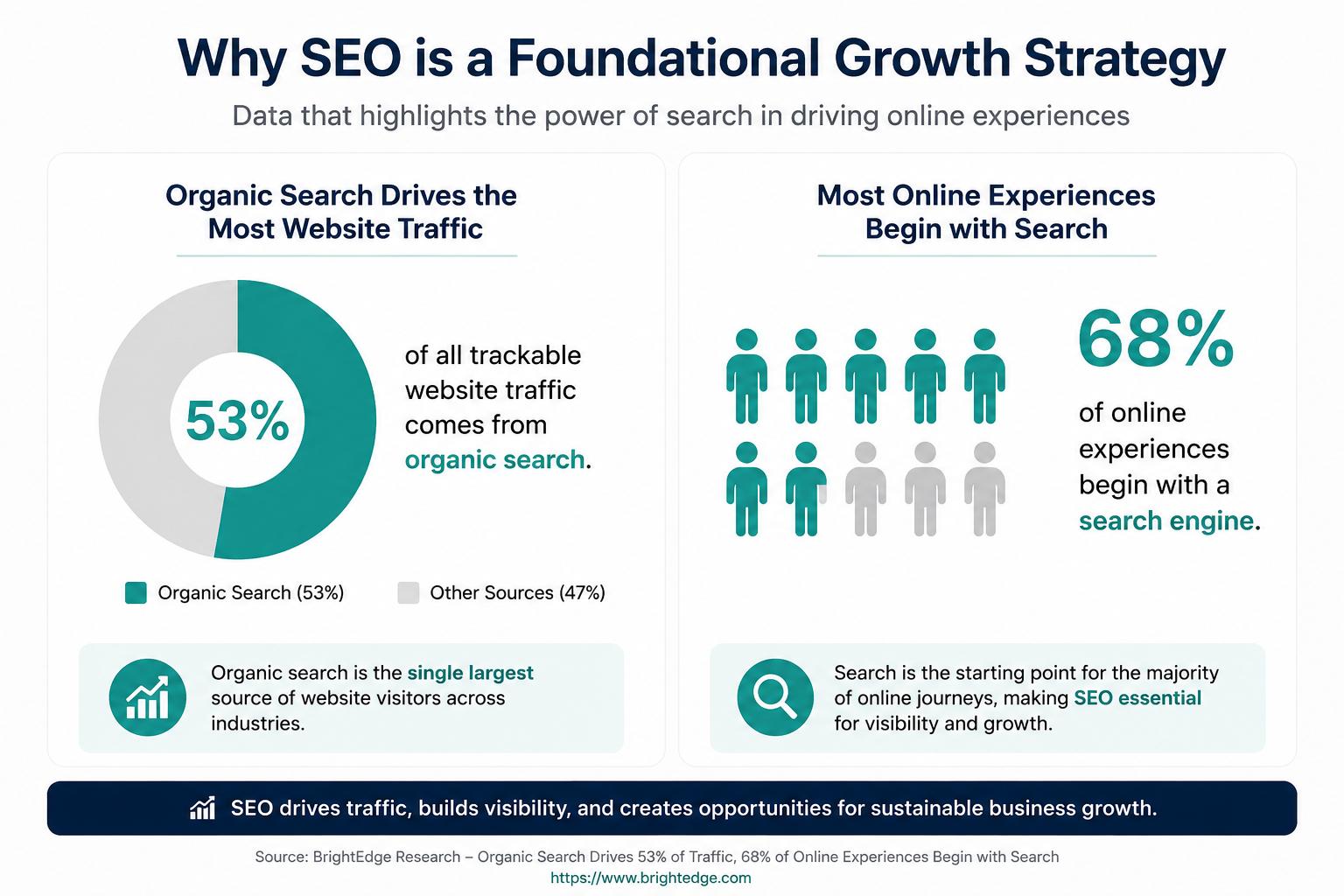
According to Search Labs, organic search drives 53% of all trackable website traffic, making it the single largest source of website visitors across industries. Furthermore, 68% of online experiences begin with a search engine, highlighting why SEO remains a foundational growth strategy for modern businesses.
This article explores when SEO transitions from a marketing activity into a long-term growth channel and how businesses can maximise its impact.
Building Sustainable Organic Traffic Foundations
SEO becomes a true growth channel when it consistently generates qualified traffic without requiring ongoing advertising spend for every visitor. Establishing a strong foundation is the first step toward sustainable organic growth. A well-structured SEO strategy creates a framework that allows businesses to attract users at every stage of the customer journey.
Search Lab research shows that the first position on Google receives approximately 31% of all clicks, while lower-ranking pages receive significantly less traffic. This demonstrates why building a strong SEO foundation is essential for capturing long-term organic visibility and traffic growth.
Keyword-Based Content Development: Creating content around high-intent, informational, and transactional keywords helps attract users actively searching for solutions. This approach ensures businesses can connect with potential customers at different stages of the buying journey.
Technical SEO Optimisation: Improving site speed, mobile responsiveness, crawlability, and indexing ensures search engines can efficiently access and rank content. Approximately 70–80% of a website's organic traffic often comes from fewer than 20% of its indexed pages, demonstrating the long-term value of high-quality evergreen content assets.
User Experience Enhancement: Better navigation, structured layouts, and intuitive design increase engagement and reduce bounce rates. A positive user experience encourages visitors to spend more time on the site and explore additional content.
Topic Authority Creation: Publishing comprehensive content clusters helps establish expertise in specific subject areas. Over time, this strengthens credibility with both users and search engines, improving overall ranking potential.
Search Intent Alignment: Content designed around actual user intent performs better than content focused solely on keyword density. Meeting user expectations increases engagement, satisfaction, and the likelihood of conversions.
Internal Linking Strategy: Strategic internal links distribute authority throughout the website and improve the discoverability of important pages. They also help guide users toward relevant content and support a more seamless browsing experience.
Evergreen Content Investment: Timeless content continues attracting visitors for months or years, generating ongoing returns from a single asset. As these resources accumulate, they can become a reliable source of consistent organic traffic and lead generation.
Build a stronger digital presence with data-driven Performance Marketing Services designed to support both immediate results and long-term organic growth.
Lowering Customer Acquisition Costs Over Time
SEO is widely recognised as one of the highest-return marketing investments. Industry research compiled from multiple SEO studies from Search Lab 2026 Statistics reports an average SEO ROI of approximately 748%, illustrating why organic acquisition becomes increasingly cost-efficient as rankings improve.
One of the clearest indicators that SEO has evolved into a growth channel is its impact on customer acquisition costs. While SEO requires upfront investment in strategy, content, and optimisation, the cost per acquisition often decreases significantly as organic visibility grows.
Unlike paid advertising, where every click has a direct cost, organic traffic can continue generating leads without incremental spending.
Reduced Dependence on Paid Traffic: Strong organic rankings decrease reliance on advertising budgets for visibility. As more target keywords rank prominently in search results, businesses can attract qualified visitors without paying for every click, helping reduce overall acquisition expenses over time.
Compounding Traffic Growth: Existing content continues generating traffic while new content expands overall reach. This cumulative effect allows businesses to increase website visibility and lead generation without needing to scale marketing spend at the same rate as traffic growth.
Improved Marketing Efficiency: SEO-generated leads often supplement and support broader marketing efforts. Organic traffic can strengthen the performance of email campaigns, remarketing initiatives, and sales outreach by consistently bringing new prospects into the marketing funnel.
Higher Return on Content Assets: Individual content pieces can generate value repeatedly over extended periods. A well-optimized article, guide, or landing page may continue attracting visitors and conversions long after its initial publication, maximizing the return on content investments.
Scalable Lead Generation: Growth in rankings can increase traffic without proportional increases in spending. As a website gains authority and visibility, businesses can capture larger audiences and generate more leads while maintaining relatively stable acquisition costs.
Enhanced Conversion Opportunities: Organic visitors often engage with multiple pages before converting, improving customer quality. Because these users are actively searching for information or solutions, they may arrive with stronger intent and a greater likelihood of becoming long-term customers.
Budget Reallocation Flexibility: Savings from organic acquisition can be redirected toward innovation, expansion, or strategic campaigns. Businesses can invest resources into new products, market opportunities, or targeted advertising initiatives rather than relying heavily on paid traffic for growth.
Establishing Brand Authority and Market Trust
SEO becomes a long-term growth engine when it contributes to brand credibility. Consistent visibility across search results positions businesses as trusted industry resources and increases brand recognition among target audiences.
Search engines increasingly reward websites that demonstrate expertise, authority, and trustworthiness. As a result, organisations that consistently publish valuable content often strengthen both rankings and customer trust simultaneously.
Studies from Misar SEO 2026 Statistics show that 75% of users never scroll beyond the first page of search results, meaning brands that consistently rank highly gain substantially greater visibility, recognition, and trust among potential customers.
Consistent Search Visibility: Frequent appearances in search results increase brand familiarity and recognition. Over time, repeated exposure helps businesses stay top of mind for potential customers, making users more likely to trust and engage with the brand when they are ready to make a purchasing decision.
Thought Leadership Development: Publishing educational and industry-focused content positions businesses as subject matter experts. By consistently sharing insights, trends, and practical guidance, organizations can build a reputation as reliable sources of information within their market.
Trust Through Informational Content: Helpful content builds confidence among potential customers before purchase decisions. Answering common questions, addressing concerns, and providing valuable resources demonstrates a commitment to helping users rather than simply promoting products or services.
Authority Through Topical Coverage: Comprehensive coverage of industry topics signals expertise to both users and search engines. Creating interconnected content around key subjects helps establish a brand as a go-to resource for information within its niche.
Enhanced Reputation Signals: Quality backlinks, industry mentions, and positive references from reputable sources reinforce brand credibility across the web. These signals not only support SEO performance but also strengthen customer perceptions of trustworthiness and professionalism.
Customer Journey Support: Educational content assists users throughout awareness, consideration, and decision-making stages. By providing relevant information at each step, businesses can nurture relationships and guide prospects toward informed purchasing decisions.
Long-Term Competitive Differentiation: Strong authority makes it more difficult for competitors to replicate organic success quickly. Brands that consistently invest in trust-building content and visibility often develop a lasting competitive advantage that continues to generate value over time.
Creating a Scalable Growth Ecosystem with SEO and Performance Marketing
The most successful organisations do not view SEO and paid marketing as competing strategies. Instead, they treat both as complementary growth channels that strengthen one another. SEO reaches its full potential when integrated into a broader digital marketing ecosystem.
BrightEdge reports that 68% of all trackable web traffic originates from search channels (organic and paid combined), highlighting why integrating SEO with Performance Marketing Services creates a more resilient and scalable growth strategy.
By combining organic and paid efforts, businesses can capture immediate opportunities while simultaneously building sustainable future growth.
Keyword Intelligence Sharing: Paid campaign data reveals which keywords generate the highest engagement, conversions, and revenue, allowing SEO teams to prioritize content opportunities with proven business value.
Content Performance Validation: Advertising campaigns can quickly test content themes, messaging angles, and audience interest before businesses commit significant resources to long-term SEO content development.
Improved Audience Insights: Combining data from organic and paid channels provides a more complete view of customer behaviour, search patterns, interests, and decision-making processes.
Full-Funnel Coverage: SEO helps attract users during the awareness and research stages, while paid campaigns support consideration and conversion efforts, creating a seamless customer journey.
Remarketing Opportunities: Visitors acquired through organic search can be re-engaged through targeted advertising campaigns, helping businesses stay visible and increase conversion potential.
Data-Driven Optimisation: Insights gathered from both channels enable continuous refinement of landing pages, content strategies, keyword targeting, and campaign performance.
Long-Term Revenue Stability: A diversified acquisition strategy reduces reliance on any single traffic source, helping businesses maintain consistent growth even when market conditions or platform algorithms change.
Combine the power of SEO and paid advertising with expert Performance Marketing Services that drive measurable business outcomes.
Conclusion
As AI-driven search experiences continue to evolve, SEO remains critical. A recent study analysing over 850,000 websites found that sites optimised for AI visibility generated 320% more human traffic, 2.7× more form submissions, and 2.5× more click-to-call actions than sites with lower AI visibility. (Tech Radar)
SEO becomes a long-term growth channel when it consistently delivers qualified traffic, reduces acquisition costs, strengthens brand authority, and integrates effectively with broader marketing efforts. Unlike short-term tactics that require ongoing expenditure for every result, SEO compounds over time, creating durable digital assets that continue generating value long after they are published.
Businesses that strategically combine SEO with Performance Marketing Services often achieve the strongest outcomes. Paid campaigns provide immediate visibility and actionable data, while SEO builds sustainable growth, credibility, and long-term market presence. Together, these approaches create a balanced marketing strategy capable of driving both short-term performance and long-term business success.
As competition across digital channels continues to intensify, organisations that invest in SEO today position themselves to capture sustained organic growth, improve marketing efficiency, and establish a stronger foundation for future expansion. When executed correctly, SEO is no longer just a marketing tactic, it becomes one of the most valuable growth channels a business can own.
Let Scratchpad help you build an SEO strategy that delivers lasting visibility, qualified traffic, and measurable business growth.
FAQs
1. What is SEO and how does it work? SEO improves website visibility in search engines through content, technical optimization, and authority building.
2. What are the 4 types of SEO? On-page SEO, Off-page SEO, Technical SEO, and Local SEO.
3. What are the 3 C's of SEO? Content, Code, and Credibility.
4. How long does it take to see SEO results? Most businesses see results within 3–6 months.
5. Is SEO still effective in the age of AI search? Yes. SEO remains essential for visibility in both traditional and AI-powered search results.
RECENT BLOGS
How Motion Graphics Make Brand Messaging More Effective
Why Packaging Design Plays a Critical Role in Buying Decisions
Why Mobile App Development Matters for Growing Businesses

.png)